
One of the most critical components influencing FTTH performance and economics is the optical splitter.
When used strategically, optical splitters enable service providers to expand coverage, reduce fiber usage, and simplify network operations. This article explores best practices for optimizing optical splitter usage in FTTH network design.
The Role of Optical Splitters in FTTH Networks
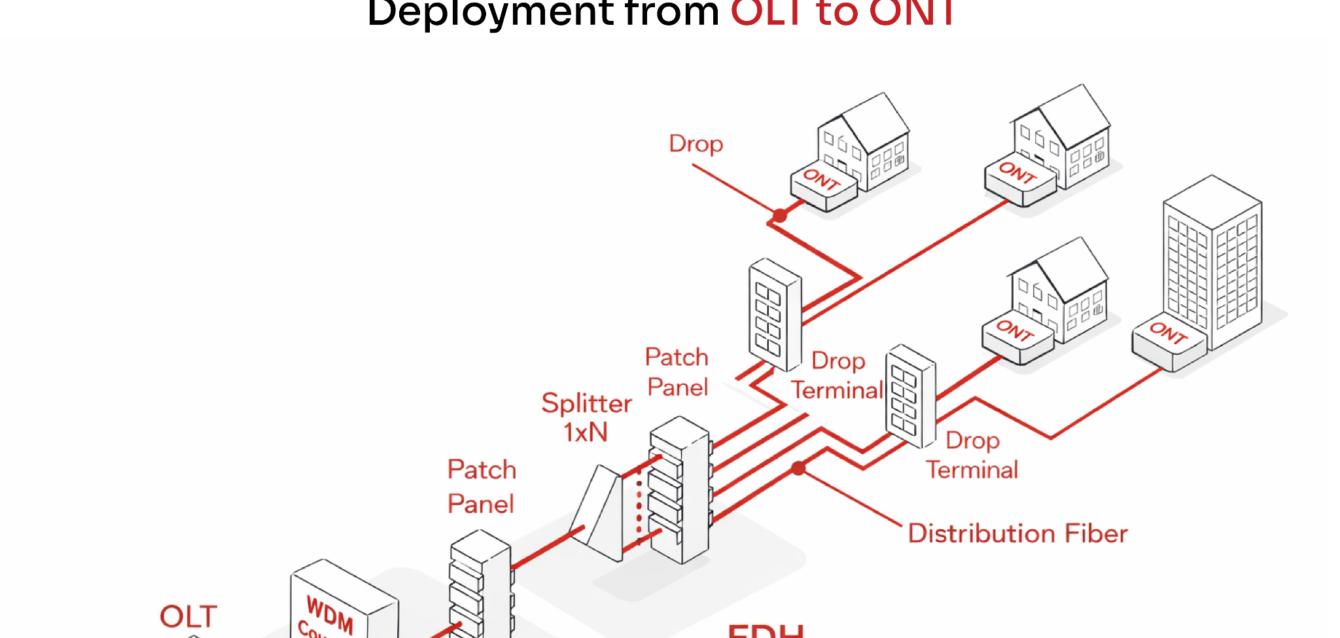
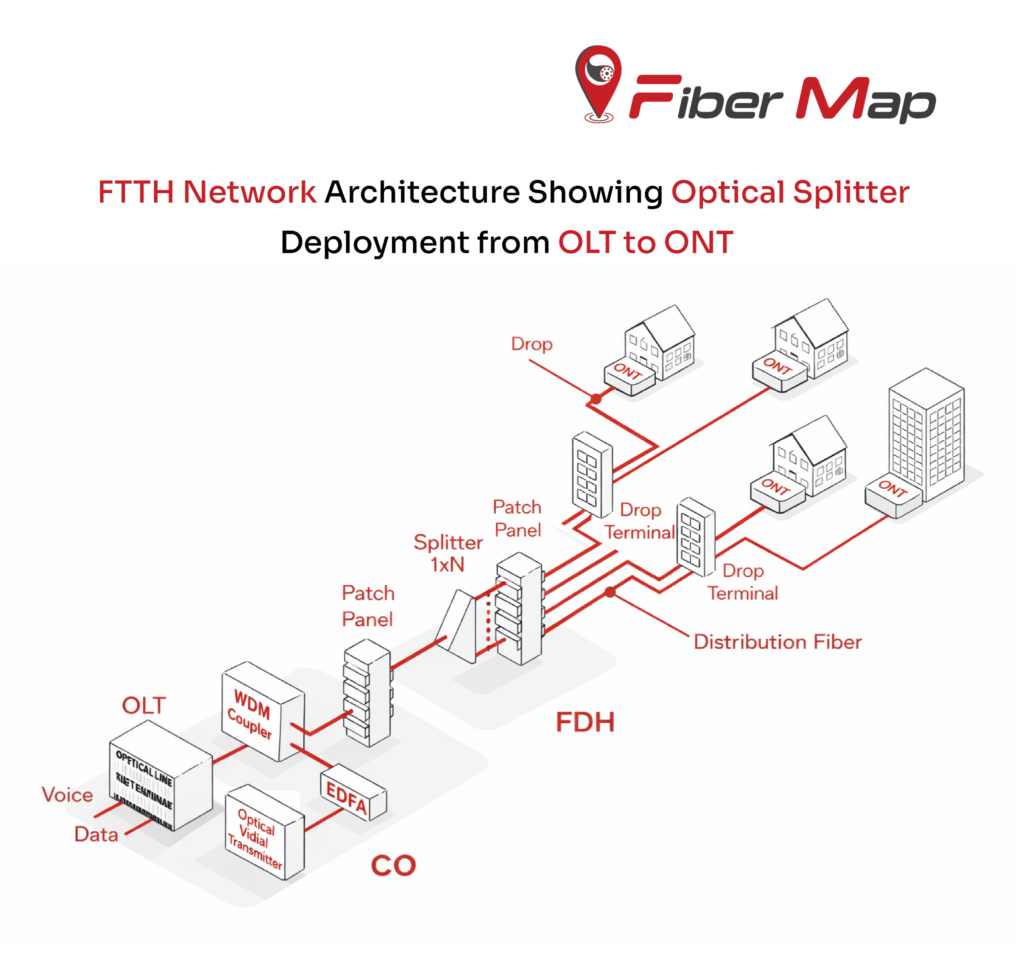
Optical splitters are passive devices that divide a single optical signal into multiple output signals. In FTTH deployments, they allow one fiber from the central office to serve multiple subscribers without requiring active power in the distribution network.
Because splitters are passive, they improve network reliability and reduce operational costs. However, improper splitter selection or placement can lead to signal loss, poor performance, and limited scalability.
Choosing the Right Splitter Ratio for Network Efficiency
Splitter ratios such as 1:2, 1:4, 1:8, 1:16, or 1:32 determine how many subscribers share a single fiber. Selecting the correct ratio depends on factors like distance, bandwidth demand, and future growth plans.
Lower split ratios provide stronger signal levels and better performance, making them suitable for longer distances or high-bandwidth users. Higher split ratios reduce fiber consumption and infrastructure costs but require careful optical power budgeting to avoid degradation.
Balancing performance and cost is key when finalizing splitter ratios.
Centralized vs Distributed Splitting Architecture
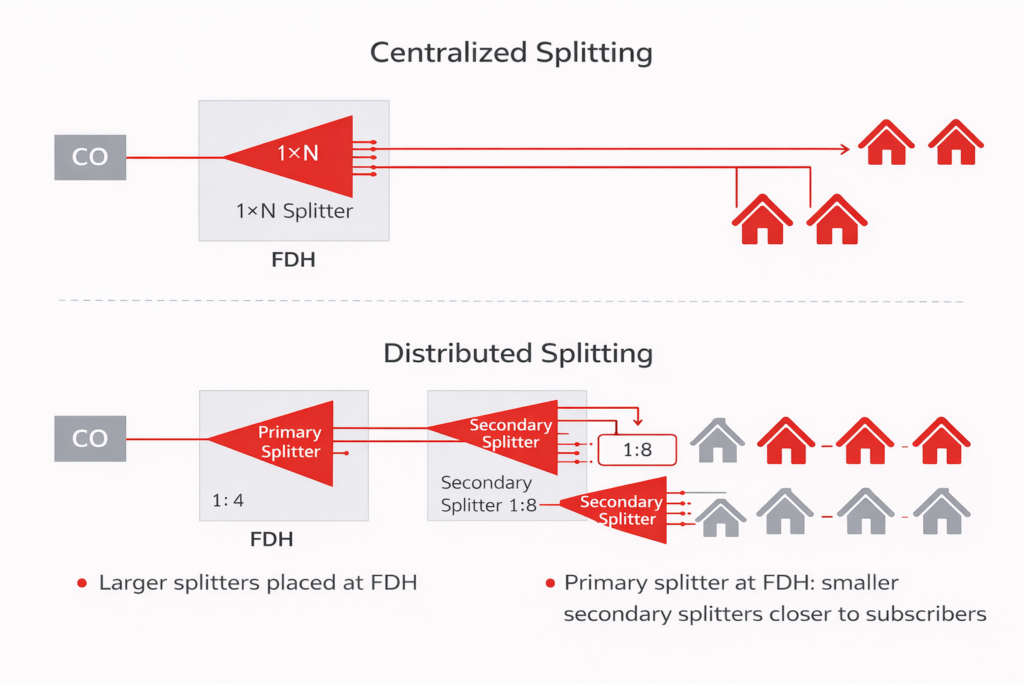
FTTH networks typically use either centralized or distributed splitting, and each approach has its advantages.
Centralized splitting places splitters closer to the central office. This design simplifies maintenance and testing while making it easier to reconfigure the network. However, it requires more feeder fiber and higher upfront investment.
Distributed splitting places splitters closer to subscribers, such as in street cabinets or fiber distribution hubs. This reduces feeder fiber requirements and lowers initial costs but can make troubleshooting and future expansion more complex.
Selecting the right architecture depends on deployment scale, geography, and operational priorities.
Strategic Placement of Optical Splitters
Splitter placement has a direct impact on signal quality and network flexibility. Placing splitters too far from subscribers may increase attenuation, while placing them too close may limit future scalability.
Ideally, splitters should be installed at points that balance optical performance, ease of access, and expansion potential. Common locations include fiber distribution frames, outdoor cabinets, and multi-dwelling unit distribution points.
Well-planned splitter placement ensures optimal signal delivery and simplifies network upgrades.
Managing Optical Power Budget Effectively
Every optical splitter introduces insertion loss, which increases with higher split ratios. Managing the optical power budget is essential to ensure signals remain within acceptable limits from the central office to the end user.
Network designers must account for fiber attenuation, connector losses, splices, and splitter loss when calculating power margins. Proper power budgeting prevents service degradation and reduces the need for costly redesigns later.
Using accurate calculations during the planning stage ensures long-term network stability.
Designing for Scalability and Future Growth
FTTH networks must be built with future expansion in mind. Subscriber growth, increased bandwidth usage, and new services can quickly strain a poorly designed splitter layout.
Using modular splitter configurations and reserving spare fibers allows operators to scale the network without major disruptions. Planning for future split upgrades or additional distribution points helps avoid costly rework.
A scalable splitter strategy supports long-term business growth and customer satisfaction.
Simplifying Maintenance and Troubleshooting
Efficient splitter deployment also improves network maintenance. Clear labeling, structured splitter hierarchies, and consistent documentation make fault detection faster and more accurate.
Accessible splitter locations reduce repair times and service outages. Maintaining proper records of splitter ratios, locations, and connected subscribers is essential for efficient operations.
Good design choices at the planning stage significantly reduce ongoing operational challenges.
Building Smarter FTTH Networks with Optimized Splitter Design
Optical splitters play a foundational role in FTTH network construction. When carefully selected, positioned, and managed, they enable service providers to deliver high-quality broadband while controlling costs.
Modern FTTH planning also requires intelligent software support. Fibermap simplifies optical splitter optimization by providing clear fiber topology visualization, splitter-level mapping, and real-time network insights. It helps operators plan splitter placement accurately, track utilization, and maintain power balance across the network. With Fibermap, ISPs can design scalable FTTH networks faster, smarter, and with far fewer errors.
Click here to learn more about Fiber Map.